Zeekr
In-car HMI
Role
UX Designer
Tools
Figma
Protopie
Blender
Photoshop
Vizcom
After effects
Tasks
Concept Design
Prototyping
User Testing
Benchmarking
Functional Mapping
Interaction Framework
Some Key
Context
When Zeekr was founded, the company was at a critical stage of defining its design language and user experience across an entire range of car segments. With safety, ease of use, and consistency as guiding principles, the challenge was to create automotive interactions that felt both intuitive and scalable.
As a part of this journey from the ground up, I was working across research, strategy, ideation, and interface design. Together with cross-functional teams, I helped shape interfaces of all sizes and touch points, ensuring accessibility and relevance to a diverse range of use cases. From early-stage concepts to implementation handoffs, my role was to translate ideas into coherent experiences that drivers could rely on every day.
Note: Below are highlights of selected projects I have been part of. Contact me for a detailed walkthrough of case studies.
Section 1
Building a Cohesive Digital UX/UI
In the area of digital interaction, I was responsible on designing adaptive infotainment experiences that work seamlessly across a wide range of screen types, sizes, and in-car contexts. This involves not just scaling interfaces visually, but rethinking how functionality adapts based on user roles, seating positions, and shared versus personal use.
My approach was to ensure usability, spatial efficiency and consistent interaction that is tailored to the needs of real-world use cases like camping, family travel, or long-distance comfort keeping in mind specific engineering and cost constraints.
Use Case
Zeekr Mix - Passenger Screen
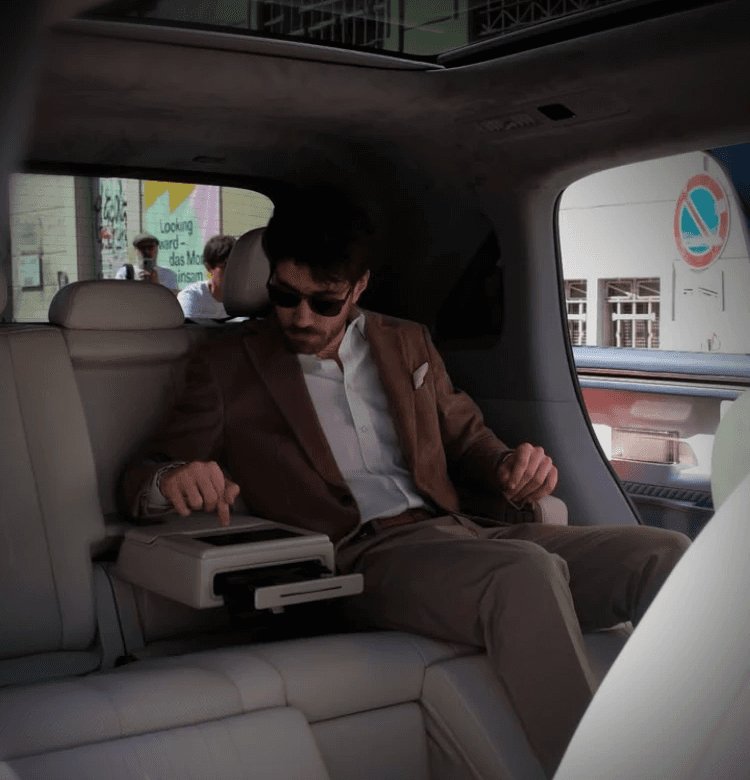

Ergonomy and Accessibility tests
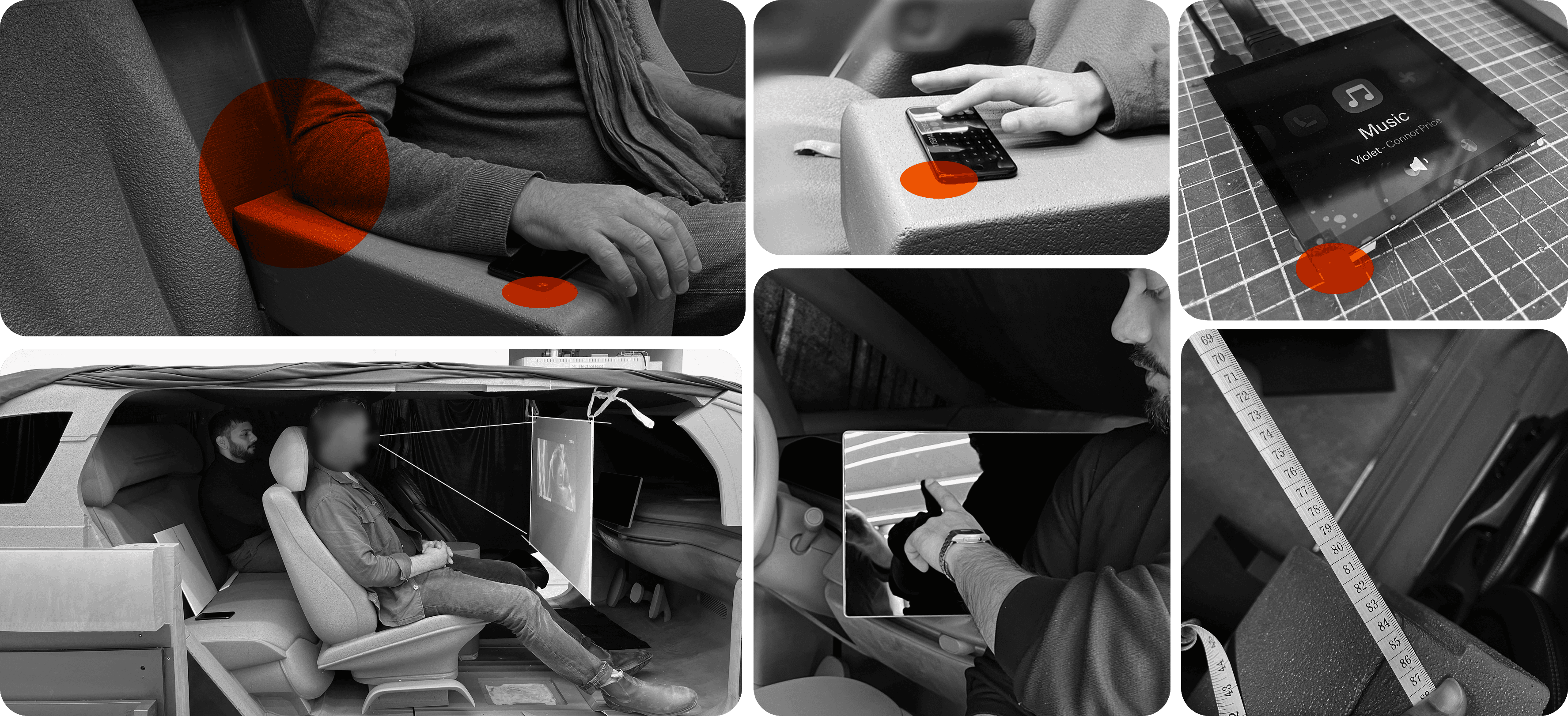
From Concept to Implementation
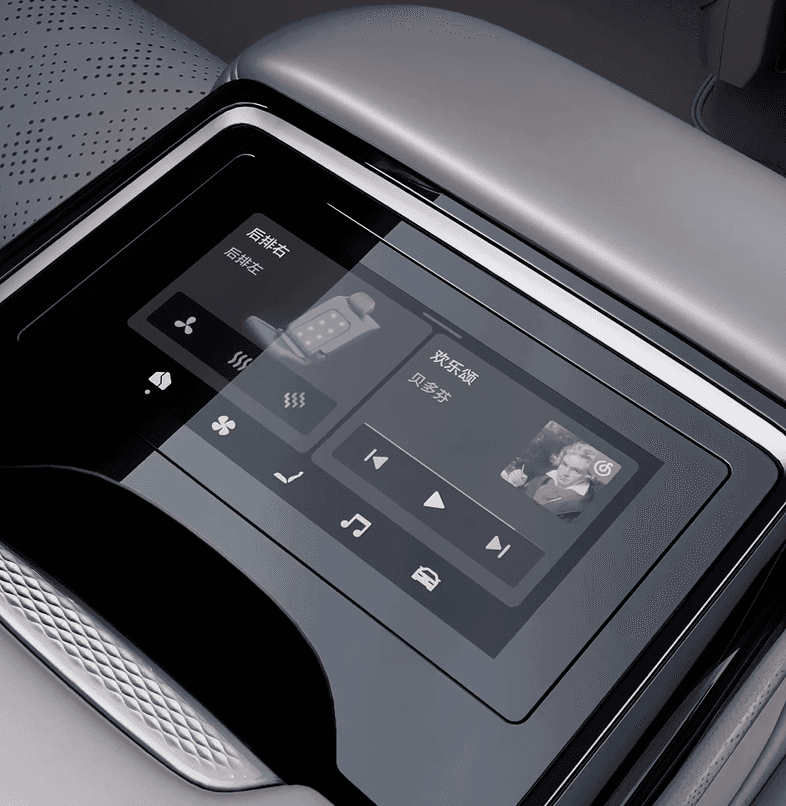
End Result
Given the constraints, we placed a second-row screen in the foldable armrest. We ended up with a proposal of a split-screen layout to ensure both passengers could access functions at any time.
Section 2
Integrating Digital and Physical Interface
In the push towards fully digital interfaces, it's easy to overlook the value of tactile interaction. While working on the Zeekr in-car experience, this tension between digital minimalism and physical usability became especially clear. Touchscreens offer flexibility, but often at the cost of attention and ease.
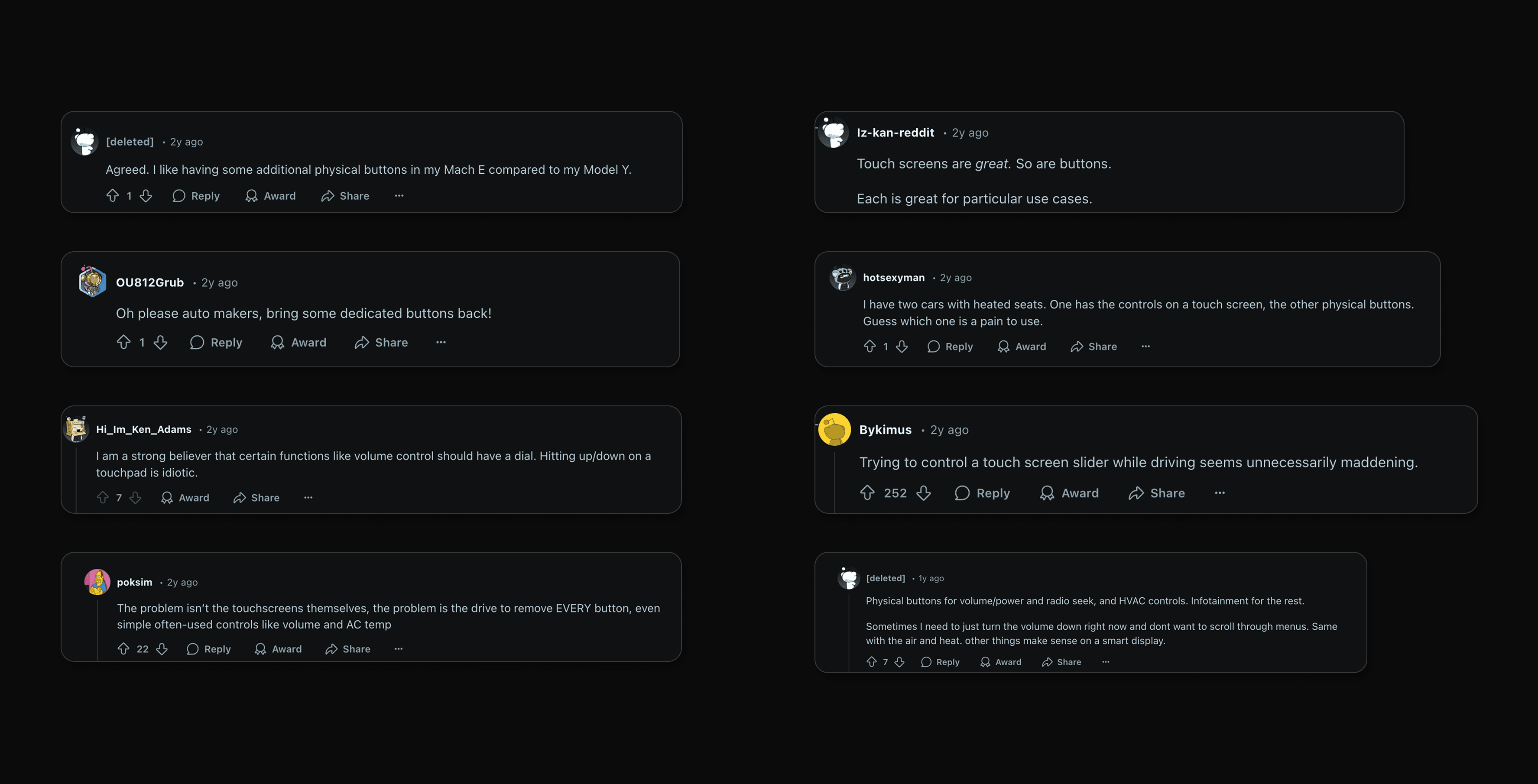
User feedback revealed a strong preference for physical controls for key functions like HVAC and audio. This led us to design a balanced experience where digital and physical elements work together to enhance safety and usability.
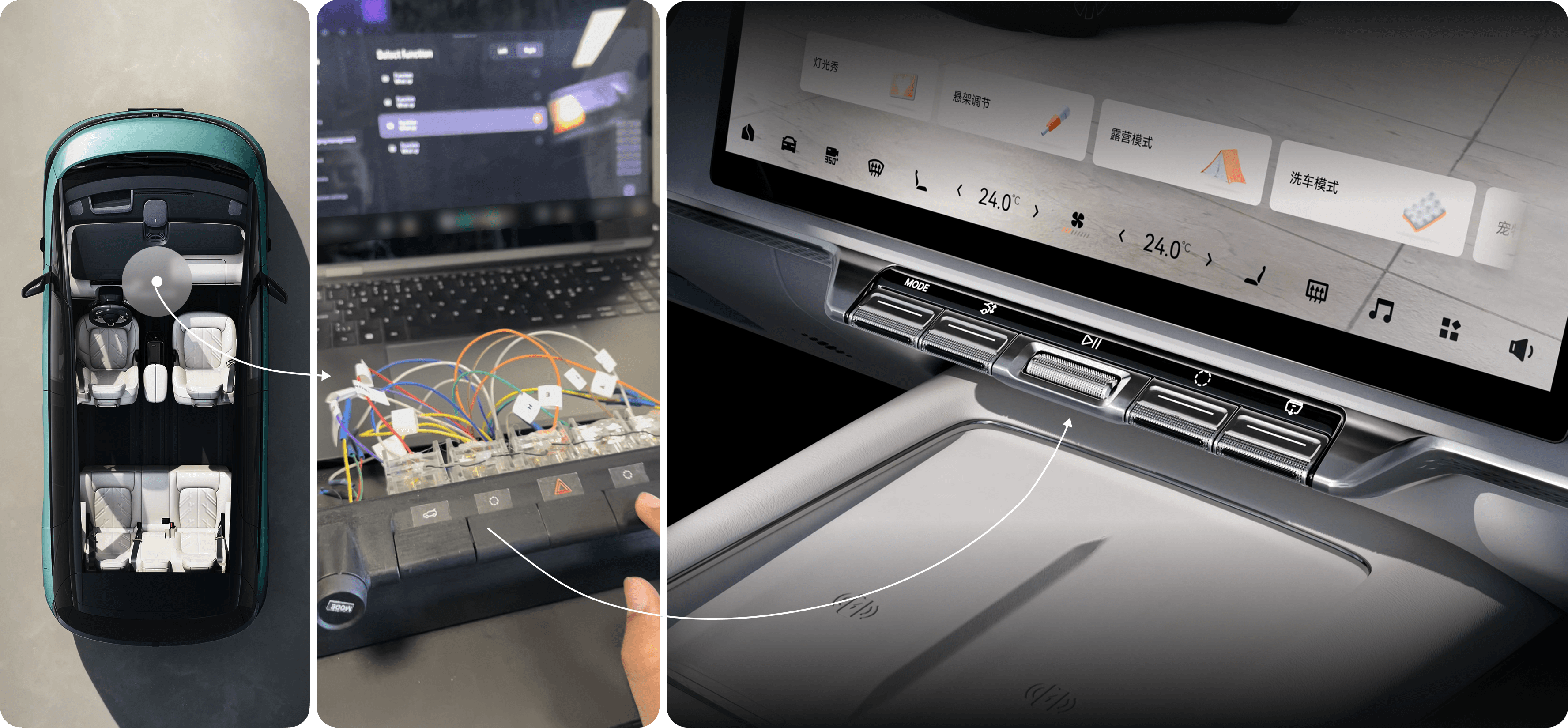
Cross platform - Switchbar
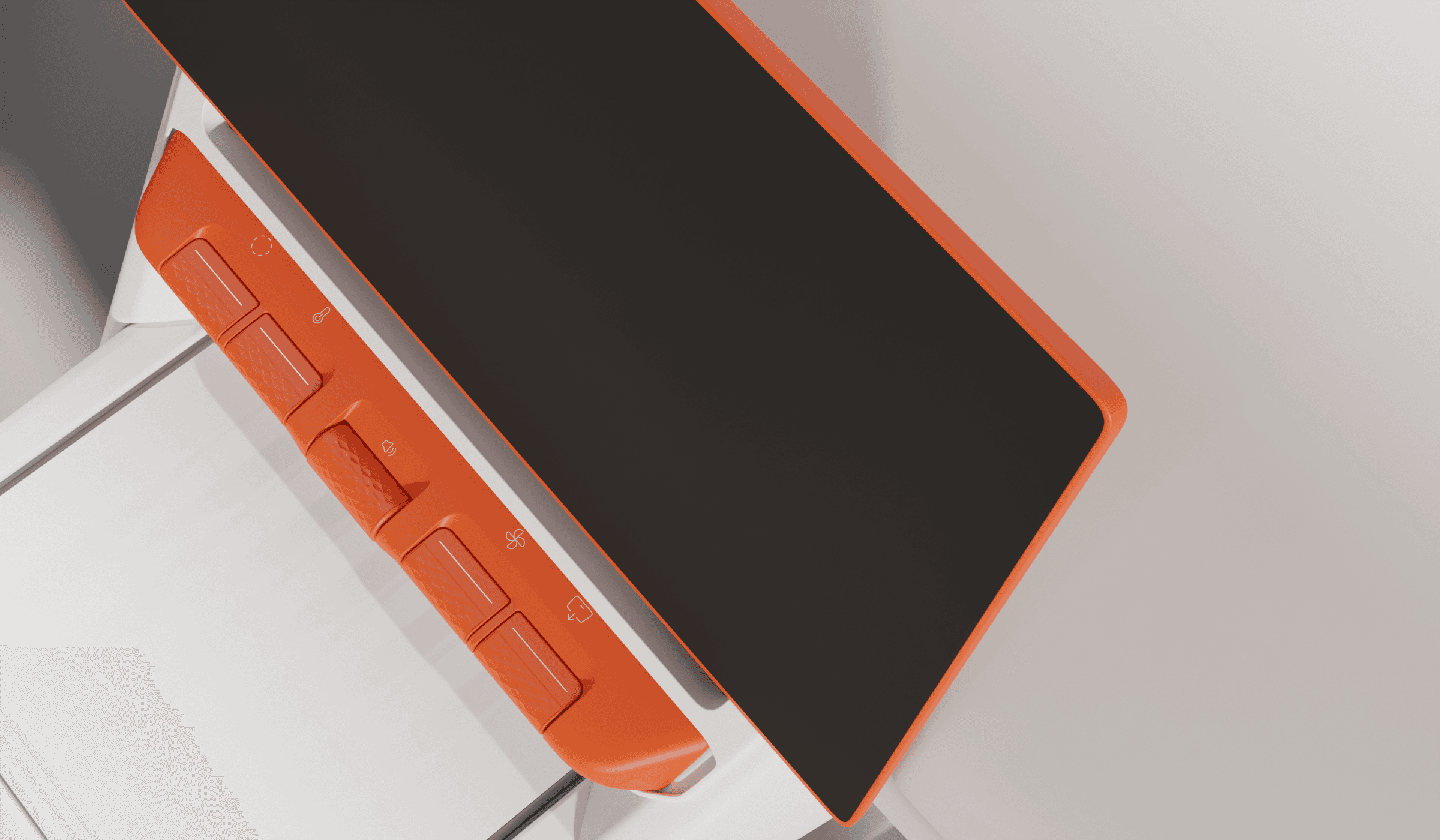
Post launch of 007, Customer have raised concerns about Safety and the lack of tactile feedback while driving.
It became obvious that we have been over relying on Screen to access all functions.
The key was to find a right balance between Digital and Physical interfaces.
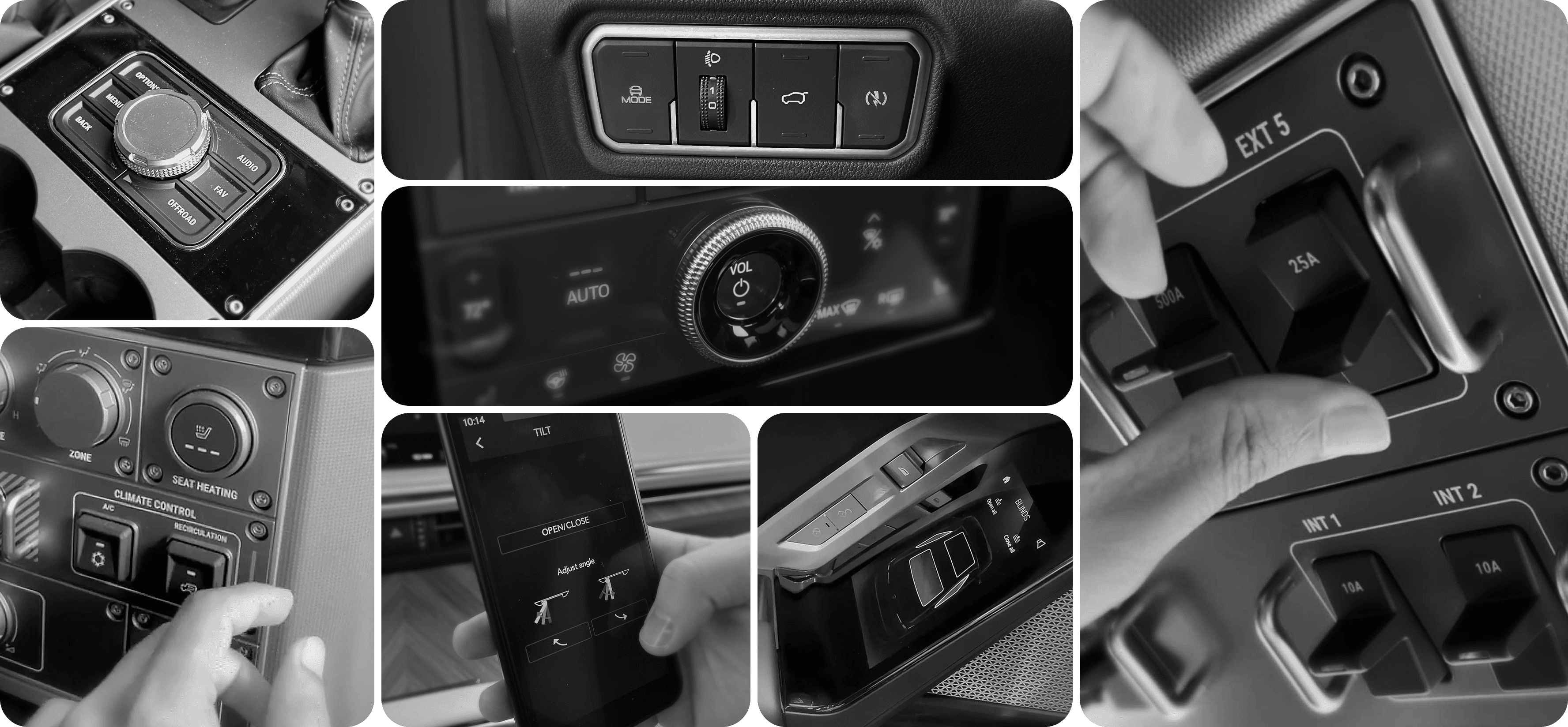
Study of form and functions
Step 1
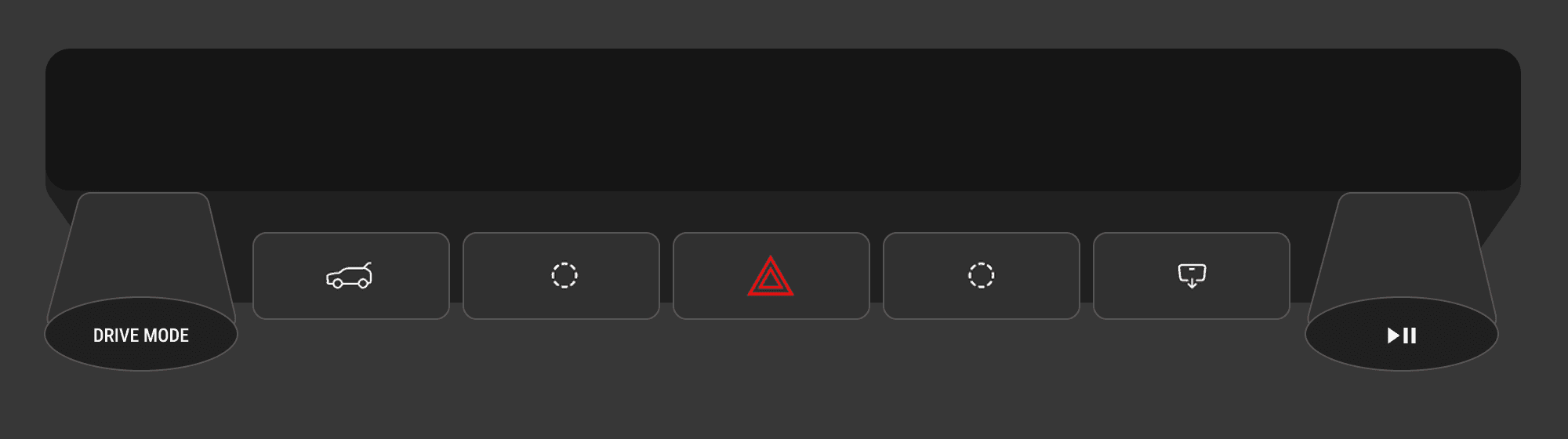
Functional Mapping
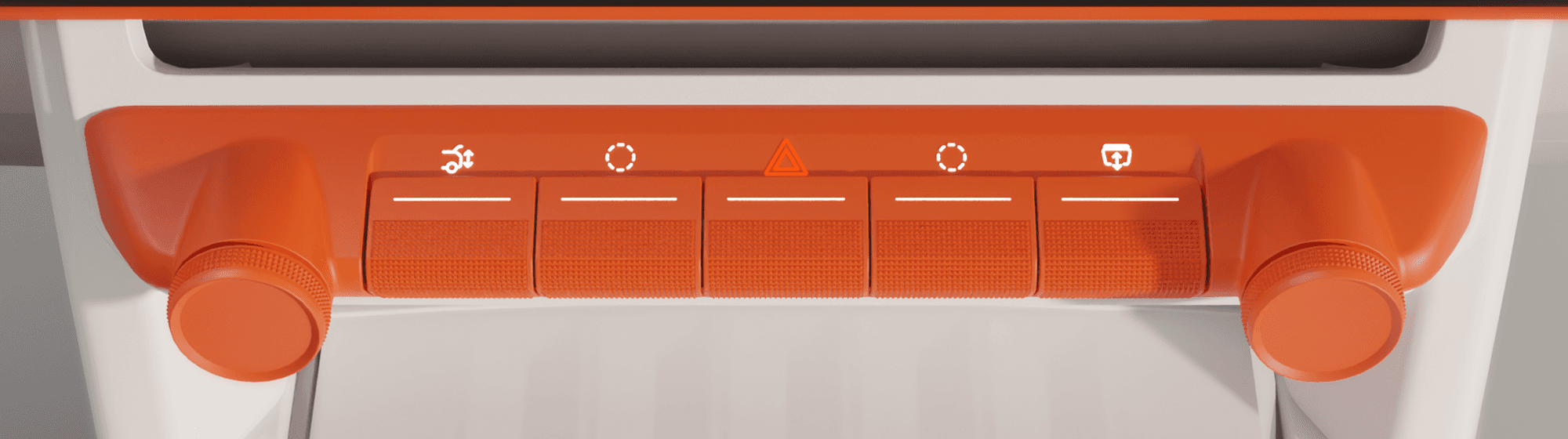
We identified functions through customer clinics and benchmarking.

User tests revealed that custom buttons were the way to go as different users had different preferences.
Step 2
Affordance & form validation
We evaluated the affordance of the physical buttons and tested multiple accessibility of the physical interface.
Step 3
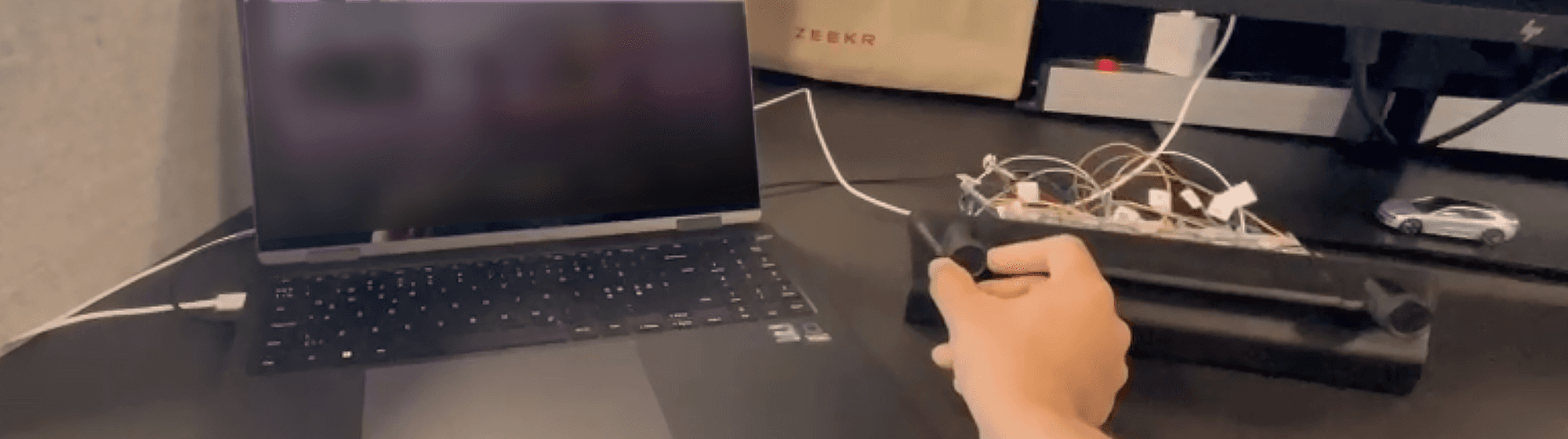
Prototyping & User Testing
Validate the concept by integrating digital and physical interfaces.
End Result